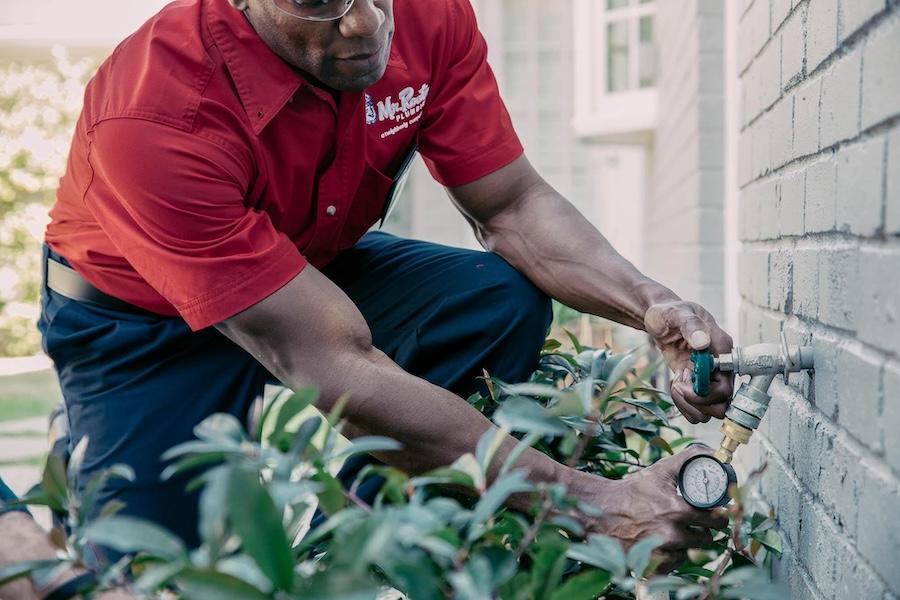
A hose bib, also known as a spigot or sillcock, comes in handy for outdoor tasks like washing cars and watering lawns. Just like indoor faucets, hose bibs are susceptible to leaks due to normal wear and tear, worn-out washers, loose connections, or damage from freezing temperatures.
A leaky hose bib should be fixed in a timely manner to avoid water waste, water damage, and frost damage during winter. While it’s possible to fix a leaking hose bib yourself, depending on the cause of the leak, you should know when to call a professional plumber for help. Here at Mr. Rooter Plumbing, we take pride in diagnosing and repairing various plumbing fixtures, including outdoor faucets. In this article, our plumbers share steps on how to fix a leaky hose bib.
- Turn Off the Water Supply
Before doing any work, locate and shut off the water supply to the hose bib. Some homes have a dedicated shut-off valve for outdoor faucets; if not, you may need to shut off the main water supply to the house. This is a crucial step to prevent water spraying when you disassemble the faucet.
After turning off the water, open the hose bib to release any remaining water in the pipe. This also helps relieve pressure in the system, making the repair process cleaner and easier.
If the leak appears around the handle when the faucet is turned on, the issue might be the packing nut. This is the hex-shaped nut located just behind the handle. Use an adjustable wrench to gently tighten it—just a quarter or half turn. Over-tightening can damage the washer or threads. If the leak stops, you’ve fixed the problem. If not, move to the next step.
Leaks that drip from the spout, even when the faucet is fully closed, usually point to a worn-out rubber washer. To replace it:
- Use a wrench to unscrew the packing nut and pull out the valve stem.
- At the bottom of the stem, you’ll find a washer secured with a screw.
- Remove the screw, replace the old washer with a new one of the same size, and reassemble the valve.
- Insert the stem back into the faucet body and tighten the packing nut securely.
- Inspect the Vacuum Breaker
Many modern hose bibs include a vacuum breaker—a small backflow prevention device on the top. If water is leaking from the top, unscrew the vacuum breaker cap and inspect the inner parts. Cracked or brittle components should be replaced. You can find replacement vacuum breakers at most hardware stores.
- Turn the Water Supply Back On
Once everything is back in place, slowly turn the water supply back on. Check for leaks around the handle, spout, and vacuum breaker. If everything is dry, your repair is successful.
If your hose bib is cracked, corroded, or outdated, it’s best to replace it and save money in the long run. Reach out to a trusted plumbing repair service specializing in faucet replacement for help.
Reach Out to Mr. Rooter Plumbing for Professional Leak Detection Services
Do you need professional leak detection services? Look no further than Mr. Rooter Plumbing. Our plumbers have years of experience fixing all types of water leaks, including faucet leaks, appliance leaks, slab leaks, toilet leaks, and many more. Whether you have a leaky hose bib or a hidden leak, our professional plumbers are standing by to provide you with lasting solutions. Contact us today to request a free estimate and book an appointment with our plumbers.